Human rights defenders (HRDs) in the Asia-Pacific are working amidst a backdrop of rising authoritarianism and shrinking civic spaces. The expansion of surveillance and censorship regimes, exacerbated by AI and emerging technology, threatens the safety and security of civil society actors, journalists, activists, and marginalised groups and their capability to exercise fundamental rights online. Regional cooperation is needed to confront these shared challenges.
The Digital Rights in the Asia-Pacific (DRAPAC) programme aims to strengthen networks and platforms for digital rights among civil society organisations and allied actors in the Asia-Pacific. Through alliance-building, knowledge exchange, and strategic advocacy initiatives, we contribute towards regional cooperation and fostering resilient communities of practice, exploring pathways against the closure of civic spaces and digital authoritarianism.
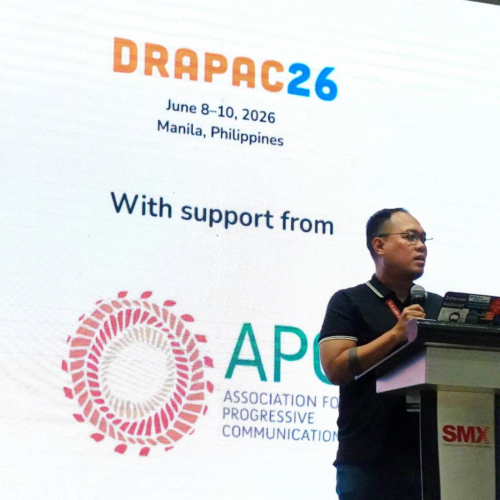
Our flagship event, the DRAPAC Assembly, serves as a vital forum for expanding human rights spaces, fostering solidarity and coordinated action, and stimulating collective solution-making for a unified response to shared challenges. Throughout its four editions – DRAPAC23 in Chiang Mai, Thailand; DRAPAC24 in Taipei, Taiwan; DRAPAC25 in Kuala Lumpur, Malaysia; and DRAPAC26 in Manila, Philippines – the events have brought together over 2,000 civic tech actors from the region, including human rights defenders, advocates, thought-leaders, researchers, policy-makers, and an emerging, next-generation of actors.
Beyond the Assemblies, the programme sustains engagement among the community through the DRAPAC Series of webinars that aim to deepen knowledge and discourses around key digital rights issues, and country-level convenings that strengthen alliances and facilitate opportunities for civil society actors to explore potential collaborations and amplify the impact of their collective advocacy work.
Read the DRAPAC Assembly public reports: