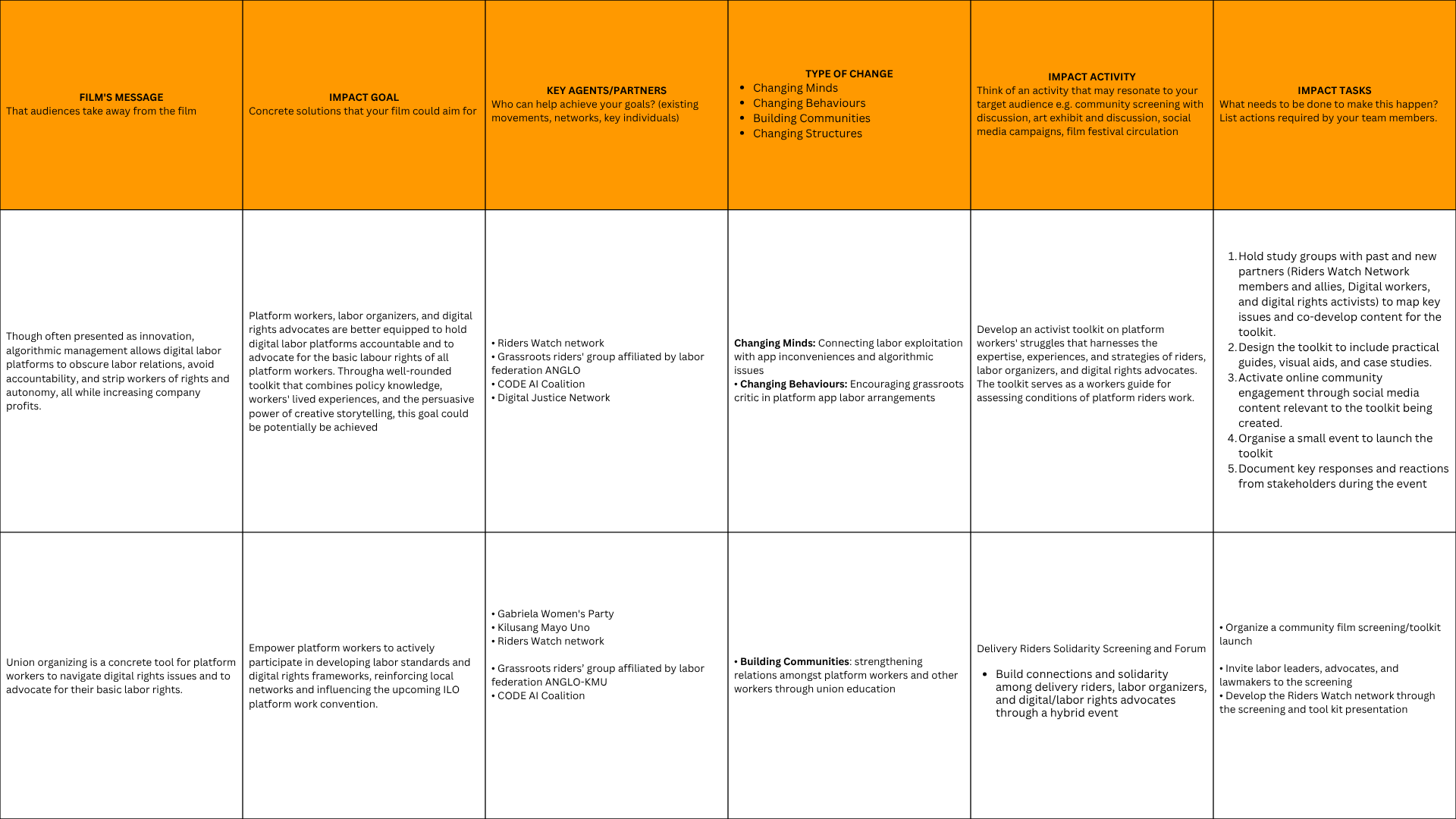
Platform workers in the Philippines face exploitative and often invisible working conditions. Delivery platforms use algorithms to control work, reduce autonomy, and prioritise profit over basic rights. While gig work offers flexibility, it comes with unstable income, opaque systems, and limited legal protections, leaving workers vulnerable and excluded.
These realities are explored in On Our Own Time, directed by Kat Catalan. The film follows delivery riders in Metro Manila, revealing how algorithmic systems and labour conditions intersect to produce rights violations and everyday insecurity and laying the groundwork for practical advocacy. Produced in collaboration with Mayday Multimedia, the team Kat worked with to co-produce the film, implement the impact campaign, and develop advocacy materials that situate riders’ lived experiences within the broader gaps and limitations of existing labour legislation.
As part of EngageMedia’s Tech Tales Youth Extended Impact programme, Kat translated the film into a practical advocacy tool through the Riders Watch Toolkit. Developed with the Tech Tales Youth Impact Campaign Builder, the Riders Watch Toolkit responds to questions raised by both young riders and veteran labour organisers during community screenings. It provides practical guidance on digital and labour rights and equips riders and organisers to navigate and challenge the evolving landscape of platform work.
The Riders Watch Toolkit: Mapping the Realities of Platform Work
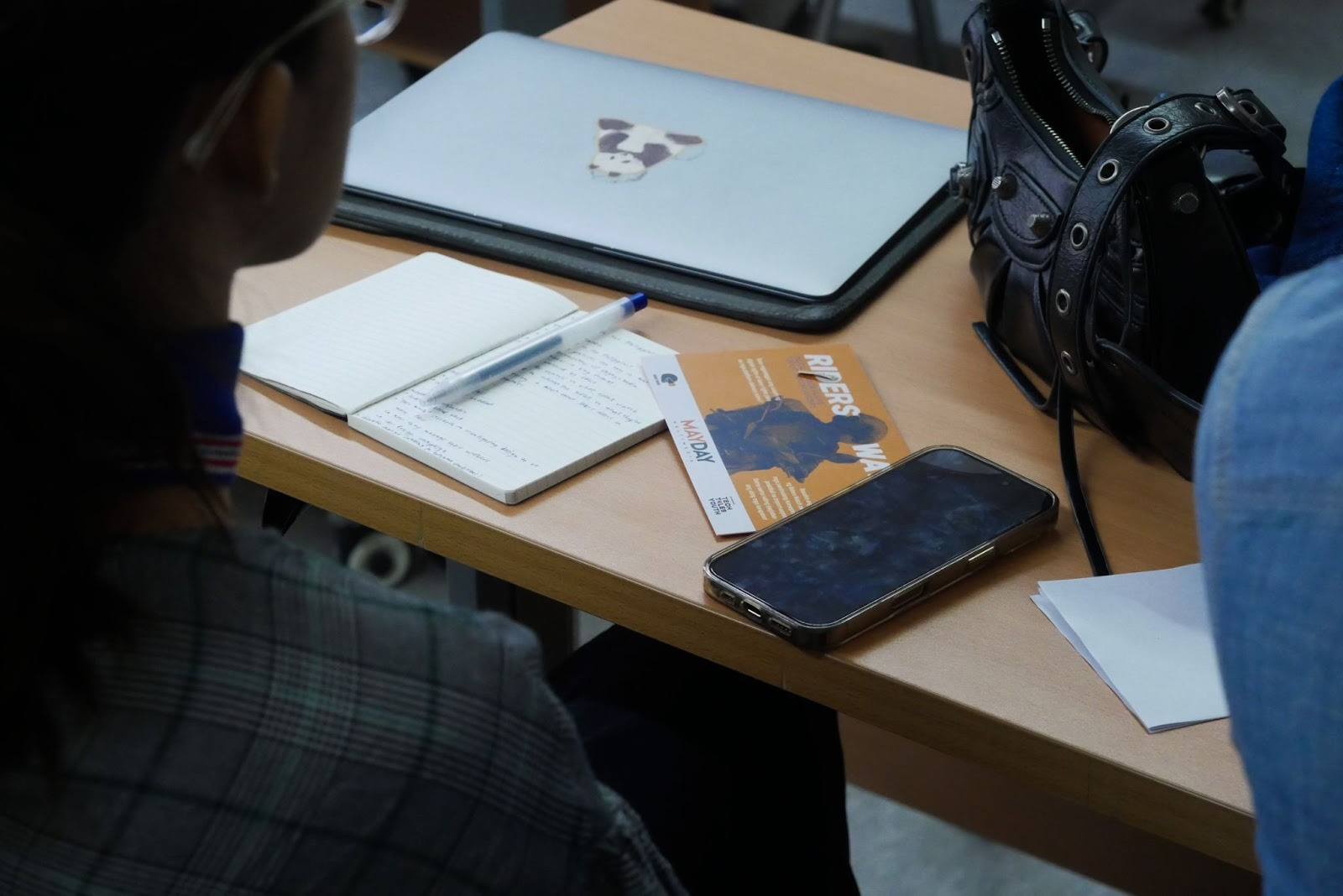
The Riders Watch Toolkit is built from the daily experiences of platform workers. Through consultations with riders, labour organisers, and digital rights advocates, it addresses critical knowledge gaps—such as missing labour protections, opaque algorithms, and how platforms consolidate control over work. These discussions revealed a striking reality: although the tools are digital, the power dynamics of control and precarity echo traditional labour exploitation.
“Platform work may seem different from factory labour,” Kat Catalan notes, “but the core dynamics of control and precarity remain.” The toolkit makes these continuities visible, linking traditional labour organising with digital rights advocacy, and giving workers practical strategies to navigate a rapidly evolving platform economy.
The toolkit combines clear explanations of digital and labour rights with real-life examples from riders’ experiences. It offers guided questions for interviewing riders, case studies of common digital and labour rights violations, and curated references on platform work. Freely available, it enables riders and organisers to identify exploitative practices, assess working conditions, and develop collective strategies, turning individual experiences into shared knowledge and action.
Screenings as Spaces for Dialogue and Collective Strategy
On Our Own Time has extended beyond the screen, creating spaces for learning, dialogue, and strategic action. Screenings, including PLATFORM RIDERS, UNITE! during Pistang Manggagawa in Quezon City, and the Critical Computing: Manila Gathering at the University of the Philippines, brought riders, labour organisers, scholars, and digital rights advocates together. Paired with roundtable discussions, the film became a catalyst for collective reflection and planning.
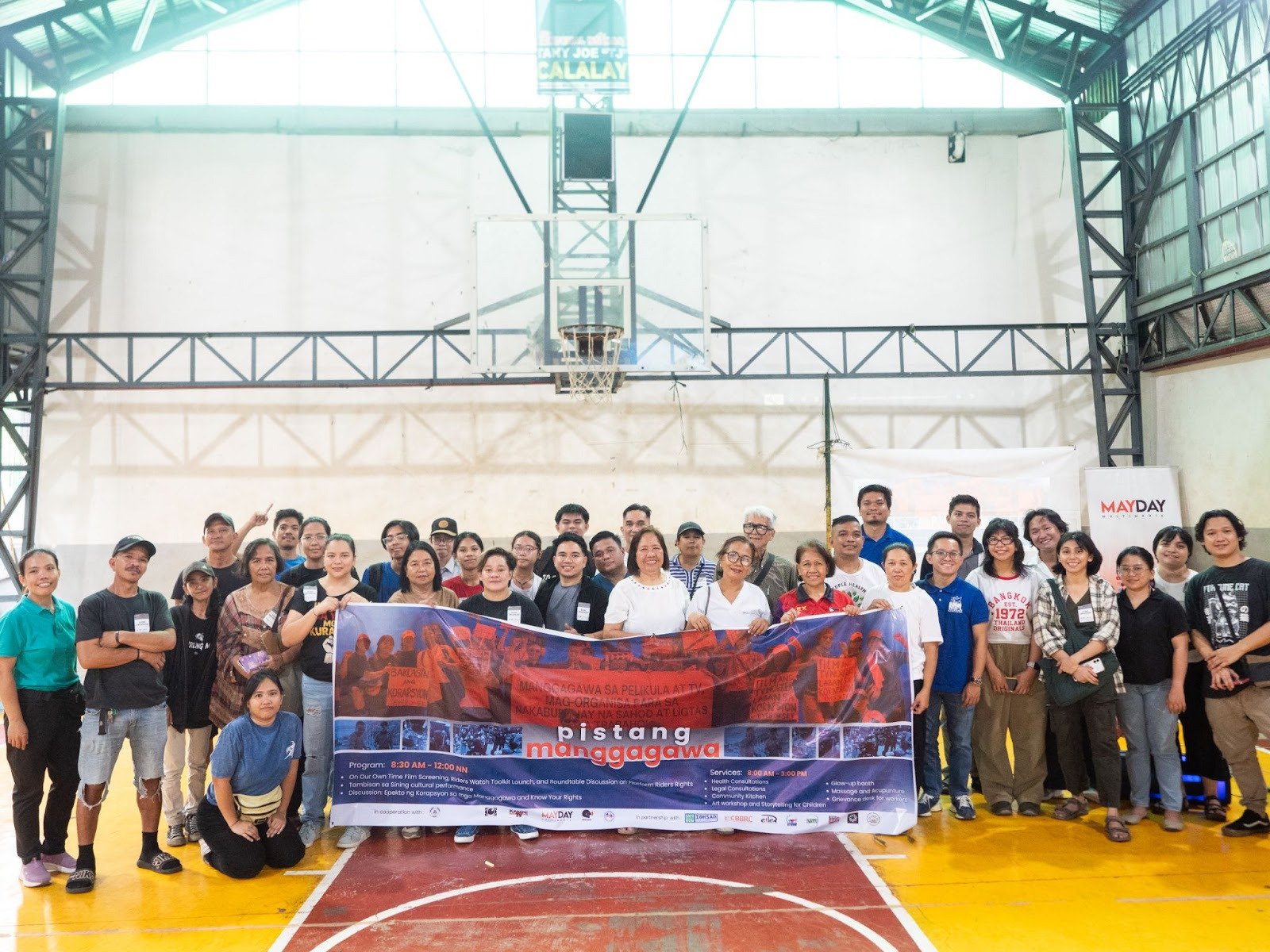
This understanding deepened during a community workers’ fair, where riders spoke directly with progressive leaders, including Jerome Adonis of Kilusang Mayo Uno and former lawmaker France Castro. Riders highlighted the multiple insecurities they face daily: unstable income, changing platform policies, and limited legal protections. Riders also pointed to regulatory gaps that leave government bodies struggling to monitor platform companies and safeguard workers’ job security. At the Critical Computing: Manila Gathering, discussions with academics and information professionals highlighted the need to ground technical debates in workers’ lived experiences. Participants emphasised that designers and researchers of digital systems must understand everyday labour realities to ensure platforms uphold, rather than undermine, basic human and labour rights.
For Kat Catalan, these screenings serve as organising moments where workers, digital rights advocates, and researchers come together, align demands for algorithmic transparency with labour rights, and transform shared stories into collective action. Some of the participants’ feedback had reinforced the film’s roles beyond sectoral silos. Many audiences who came not only connected with On Our Own Time, through shared issues, but also through shared struggle. Some of them shared that;
“At the beginning, it seemed simple. But after this, we realised — this is the world we’re dealing with. One approach won’t be enough. Even in factories, where workers are physically clustered together, organising is already difficult — what more with riders? Riders are constantly changing. In that kind of setup, one organising strategy we thought of is through the community.” – Romy, labour organiser, Workers Motorcycle Riders Association (ANGLO-KMU)
“I appreciated the video because it surfaced their concerns. Many of these are actually digital rights issues, but workers aren’t aware of that yet. The legal side of tech hasn’t fully caught up. There are many tech advocates willing to help legally. If we develop this kind of study instrument, we could gain many allies — both local and international.” – Xian, Digital Rights activist, Computer Professionals’ Union.
Towards Collective Empowerment and Action
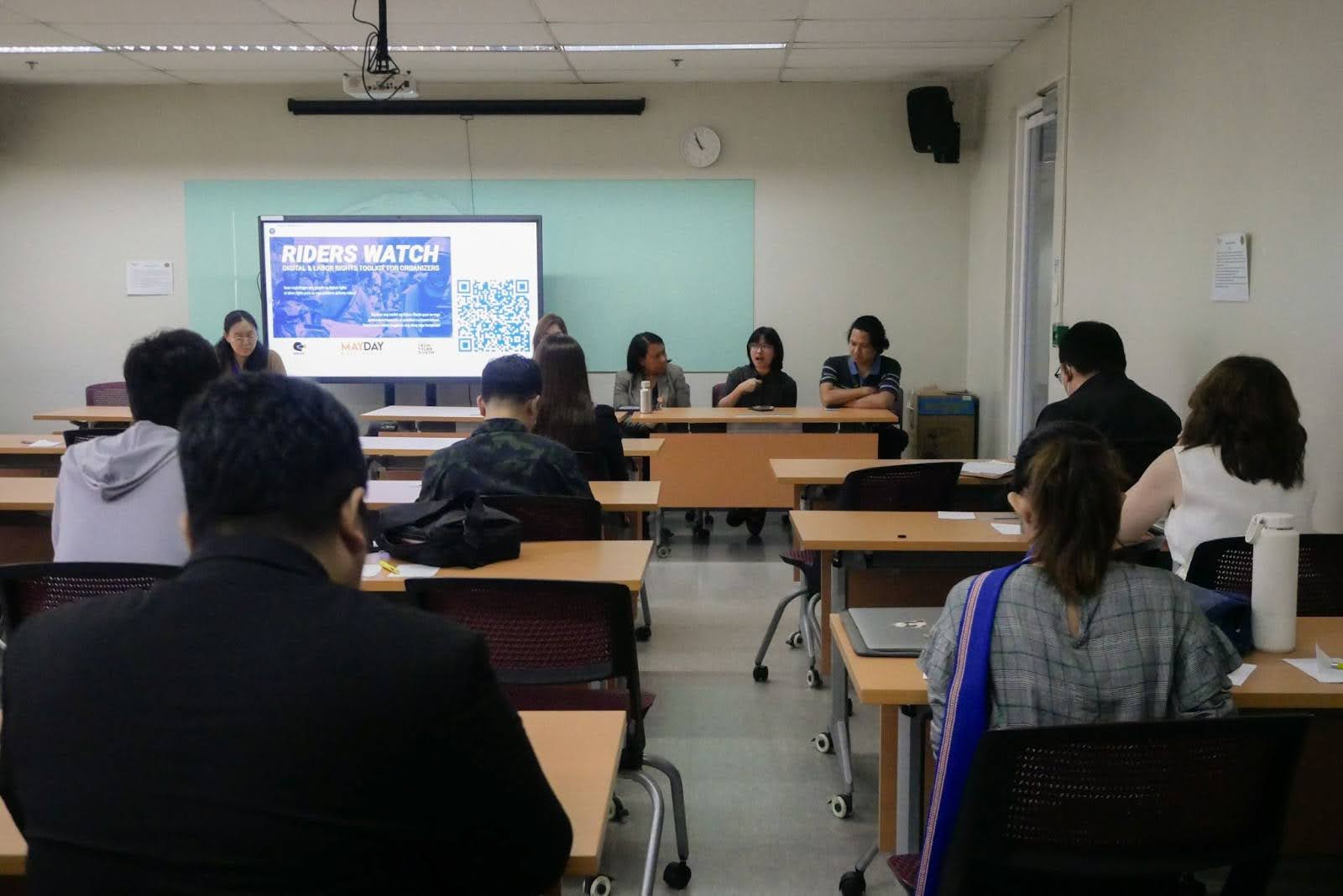
Looking ahead, Kat envisions On Our Own Time as more than a documentary; it serves as a bridge connecting platform workers, labour organisers, and digital rights advocates to broader public conversations. Through ongoing screenings, toolkit distribution, and participatory discussions, the project creates spaces where workers’ lived realities are recognised, debated, and translated into action.
The Riders Watch Toolkit, together with community engagement initiatives, empowers platform workers to take an active role in advocacy and decision-making. By fostering collaborative learning, mentorship, and strategic organising, these initiatives shift audiences from passive observation to informed action. They strengthen workers’ ability to understand, assert, and defend their rights within digital labour systems.For Kat, sustained, community-led storytelling is vital. It transforms individual experiences into collective knowledge and connects labour and digital rights communities, opening new frameworks for organising in the platform economy. While significant work remains, especially in political education and sustained on-the-ground organising, On Our Own Time demonstrates that film can be a practical tool for empowerment, ensuring workers’ voices are heard, respected, and mobilised for systemic change.
References:
https://www.equaltimes.org/the-filipino-workers-at-the-sharp
https://engagemedia.org/2024/tech-tales-youth-analysis-on-our-own-time/
https://www.instagram.com/maydaymultimedia/?hl=en
https://engagemedia.org/projects/tech-tales-youth/on-our-own-time/
https://engagemedia.org/2025/tech-tales-youth-extended-impact/
http://tinyurl.com/riderswatchtoolkit2025
https://engagemedia.org/wp-content/uploads/2022/03/Impact-Campaign-Builder-1.1SSN_01272022-1.pdf
https://www.rappler.com/people/p75592354-jerome-adonis
https://www.rappler.com/people/p00263645-france-castro
IMPACT VISION