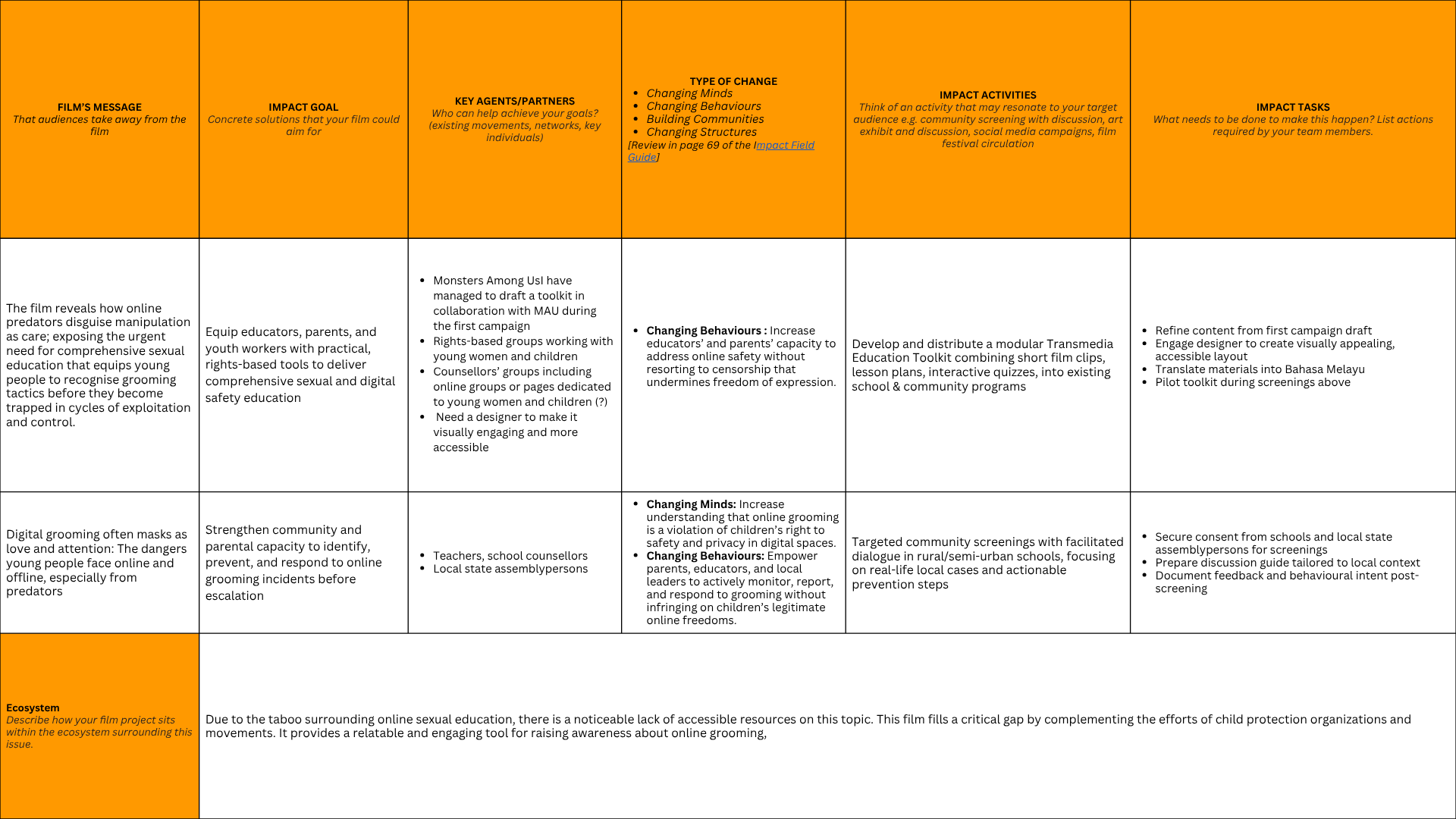
In an increasingly connected digital landscape, the internet offers young people connection and opportunity, while concealing serious risks. Teenagers navigating online spaces are often exposed to exploitation, harassment, and grooming that unfold quietly and out of sight. These realities are at the heart of filmmaker Azura Nasron’s short film Hai Anis, which follows Anis, a young teenager drawn into the manipulative strategies of online predators. By revealing how harm is often masked as care, trust, or understanding, the film foregrounds the real-world consequences of digital manipulation and underscores the urgent need for greater awareness, practical skills, and youth agency in online spaces.
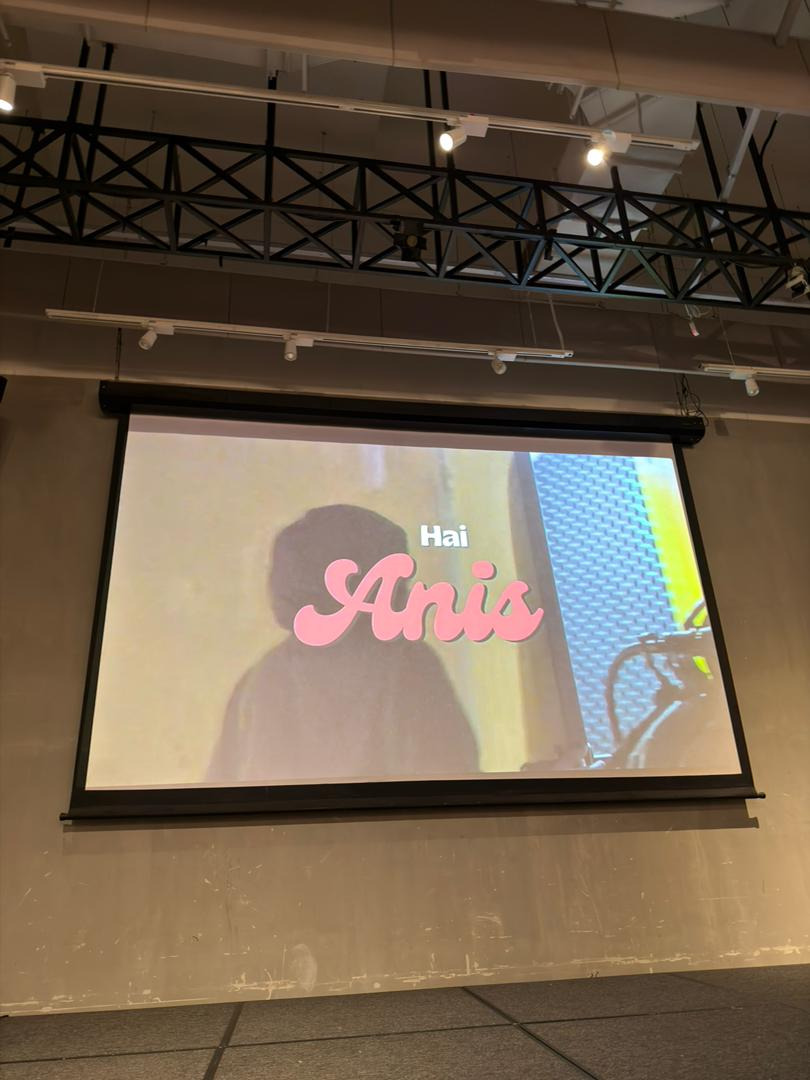
As part of EngageMedia’s Tech Tales Youth Extended Impact programme, Hai Anis has moved beyond the screen to become a practical tool for digital rights education, sparking discussions, workshops, and the development of a modular Transmedia Education Toolkit. Through the Tech Tales Youth Impact Campaign Builder, Azura translated the film’s narrative into an impact strategy that pairs storytelling with concrete learning outcomes and pathways for advocacy.
Screenings as Spaces for Dialogue and Care
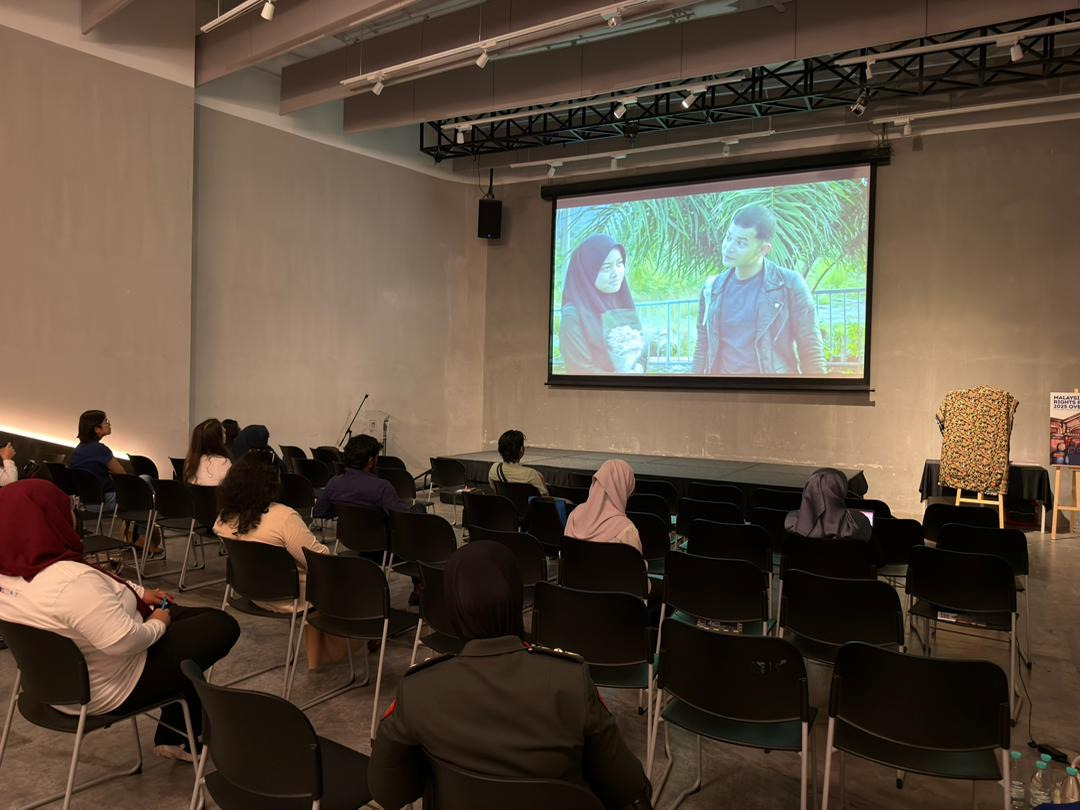
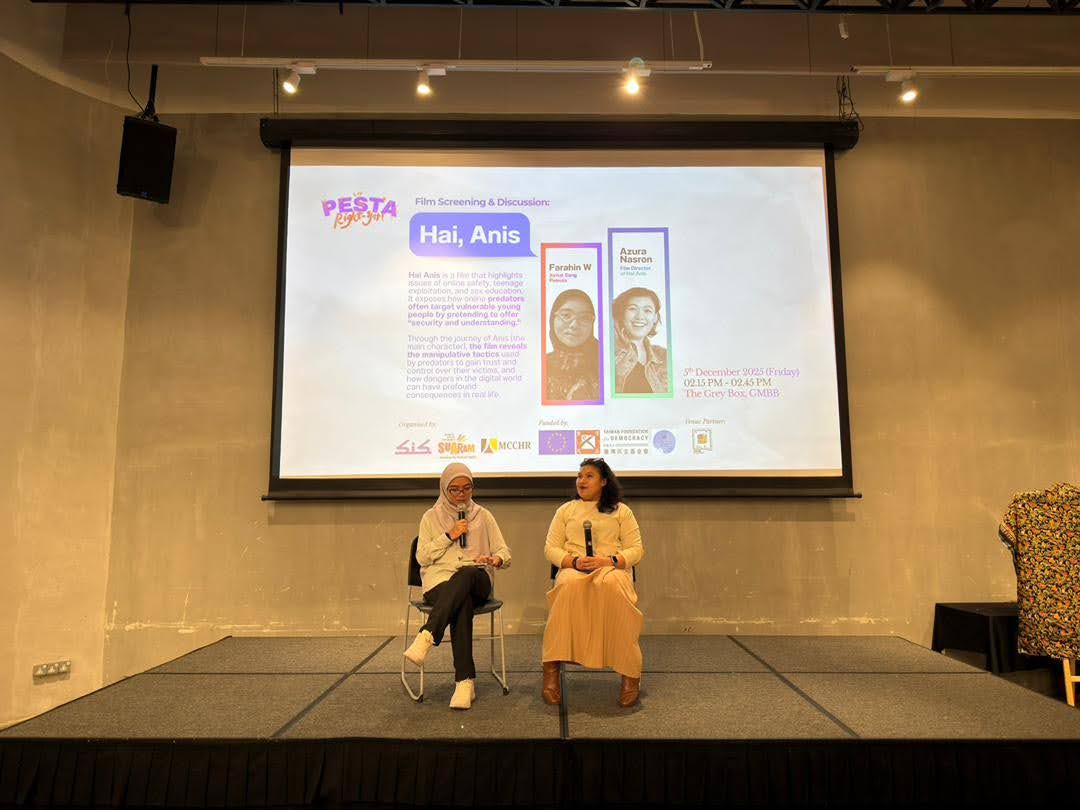
On 5 December 2025, Hai Anis was screened at Pesta Right-Yat, followed by a moderated discussion led by filmmaker Azura Nasron with Farahin Wahid, from Jurnal Sang Pemula. The screening became an entry point into conversations on online safety, consent, and digital boundaries, issues that shape young people’s everyday digital lives.
As part of its Tech Tales Youth Extended Impact, Hai Anis was intentionally presented across public screenings, educational settings, and online sessions, each generating distinct forms of engagement. Azura observed that audiences responded differently depending on context and platform, shaping how conversations unfolded. For instance, the public screenings encouraged emotional reflection and peer storytelling, helping to surface shared experiences and reduce stigma. In schools and workshops, discussions became more analytical, with young audiences examining how exploitation operates, how platforms enable harm, and where systems fail to protect users. Online sessions, meanwhile, offered safer, low-barrier spaces for participation, leading to more disclosures and underscoring the importance of trauma-informed, survivor-centred facilitation.
Reflecting on these experiences across different settings, Azura noted that each mode of engagement revealed distinct needs and possibilities. These varied responses directly shaped the modular design of the toolkit developed alongside the film, enabling facilitators to adapt its use for emotional reflection, practical skills-building, or deeper engagement with digital rights, policy, and accountability, depending on context and the communities involved.
Beyond Story: The Transmedia Education Toolkit
The Transmedia Education Toolkit extends Hai Anis beyond the screen, transforming the film into a flexible learning resource for schools, workshops, and community spaces. Designed to be modular and adaptable, it enables facilitators to tailor discussions toward emotional reflection, practical skills-building, or rights-based awareness, depending on context and audience needs.
Rooted in real patterns Azura encountered in her work, the toolkit addresses a critical gap between empathy and action. While the film opens emotional space, the toolkit translates that impact into practice, giving young people the language and tools to name what is happening to them. Through scenario-based exercises, discussion prompts, and practical strategies, the toolkit unpacks complex issues such as consent, power, manipulation, and surveillance into relatable situations drawn from everyday digital life.
Importantly, it avoids fear-based messaging. Instead of framing the internet as inherently dangerous, it focuses on building digital agency, helping young people recognise red flags, set boundaries, seek support, and look out for one another. In doing so, the toolkit shifts the conversation from “this is sad” to “this is happening—and here is what I can do,” equipping young people not only with awareness, but with confidence to navigate digital spaces and assert their rights.
Audience feedback from early screenings further underscores the toolkit’s relevance and necessity. Many participants related deeply to Anis’ feelings of isolation, confusion, and pressure, with conversations often beginning through indirect personal reflections, such as “this happened to my friend” or “I’ve seen something similar online.” These moments frequently served as a first step toward breaking the silence that had previously remained unspoken.
In more formal educational settings, discussions tended to shift from emotional identification to critical inquiry. Young people began asking “why” and “how”: why perpetrators use particular tactics and how manipulation escalates. In adult-to-adult screening contexts, particularly among educators and practitioners working with children and young people, the film was widely described as an effective and accessible starting point for conversations that are often difficult to initiate, both in classrooms and in personal or professional settings.
Building Safer Digital Futures
Looking ahead, Azura envisions Hai Anis as more than a film. The toolkit is planned for integration into school co-curricular programmes, youth clubs, and community training, with a focus on reaching groups often excluded from digital literacy initiatives.
Beyond education, Hai Anis hopes to be positioned as a catalyst for advocacy, partnering with civil society organisations and digital rights networks. By connecting personal stories to broader conversations about platform accountability, online safety policies, and freedom of expression, the film and toolkit create spaces for dialogue about how laws, corporate practices, and surveillance shape young people’s digital lives.
Ultimately, the film aims to shift culture: helping young people see themselves not as passive victims of online harm, but as rights-holders and active participants in shaping safer digital spaces. For Azura, even if it empowers a small number to feel less alone and more confident in protecting themselves and their peers, it represents a meaningful step toward resilient, informed youth in the digital world.
References:
https://engagemedia.org/2025/society-secrets-and-silence-digital-literacy-in-a-deceptive-world/
https://engagemedia.org/projects/tech-tales-youth/bangladesh-malaysia/hai-anis/
https://engagemedia.org/2025/tech-tales-youth-extended-impact/
https://engagemedia.org/wp-content/uploads/2022/03/Impact-Campaign-Builder-1.1SSN_01272022-1.pdf
https://www.therakyatpost.com/living/2025/12/02/december-kickoff-heres-where-you-should-be-this-weekend/
https://jurnalsangpemula.com/
IMPACT VISION