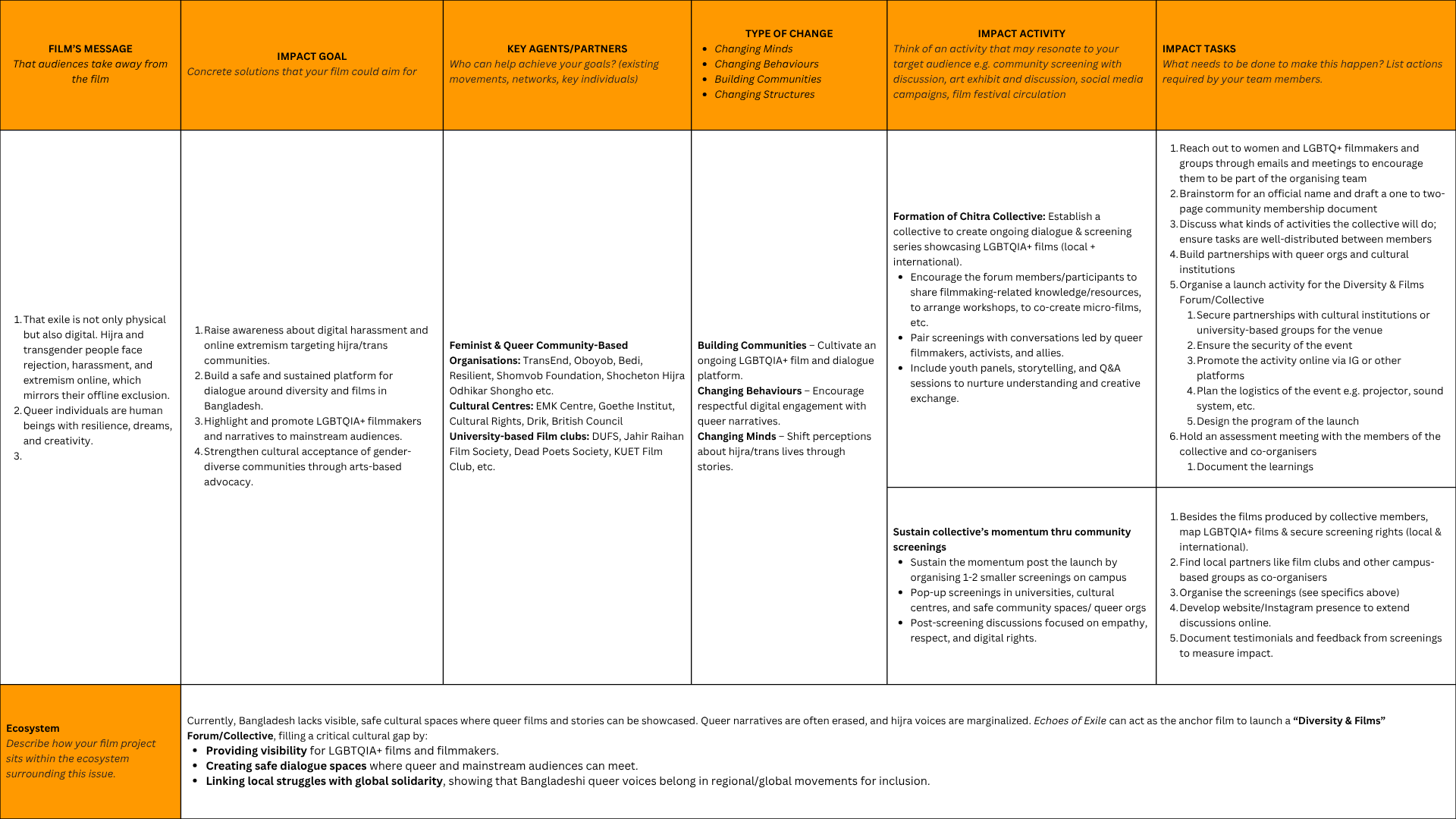
Transgender and hijra communities in Bangladesh navigate a world of invisibility and risk. Even after Bangladesh legally recognised a “third gender” in 2014, transgender and hijra communities continue to face entrenched stigma and discrimination, both online and offline. Digital spaces often amplify these dangers: harassment, doxxing, non-consensual sharing of intimate content, and hate speech force many into social or physical exile, leaving their lives and stories invisible to society at large. In this context, storytelling becomes more than art; it is a form of advocacy, bearing witness to lives too often erased.
It is against this backdrop that filmmaker Lamea Tanjin Tanha confronts these realities in her film Echoes of Exile. The film centres on the lived experiences of two hijra women from different generations, revealing the emotional, social, and structural consequences of marginalisation. As part of EngageMedia’s Tech Tales Youth Extended Impact programme, Lamea has translated Echoes of Exile into a catalyst for advocacy and cultural change. Using the Tech Tales Youth Impact Campaign Builder, she mapped how the film could move from storytelling to tangible impact by co-founding CHITRA Collective, turning Echoes of Exile into a sustained platform for advocacy. The collective aims to host more local and international LGBTQIA+ film screenings and dialogues, amplifying transgender and gender-diverse voices while fostering ongoing cultural and social change in Bangladesh.
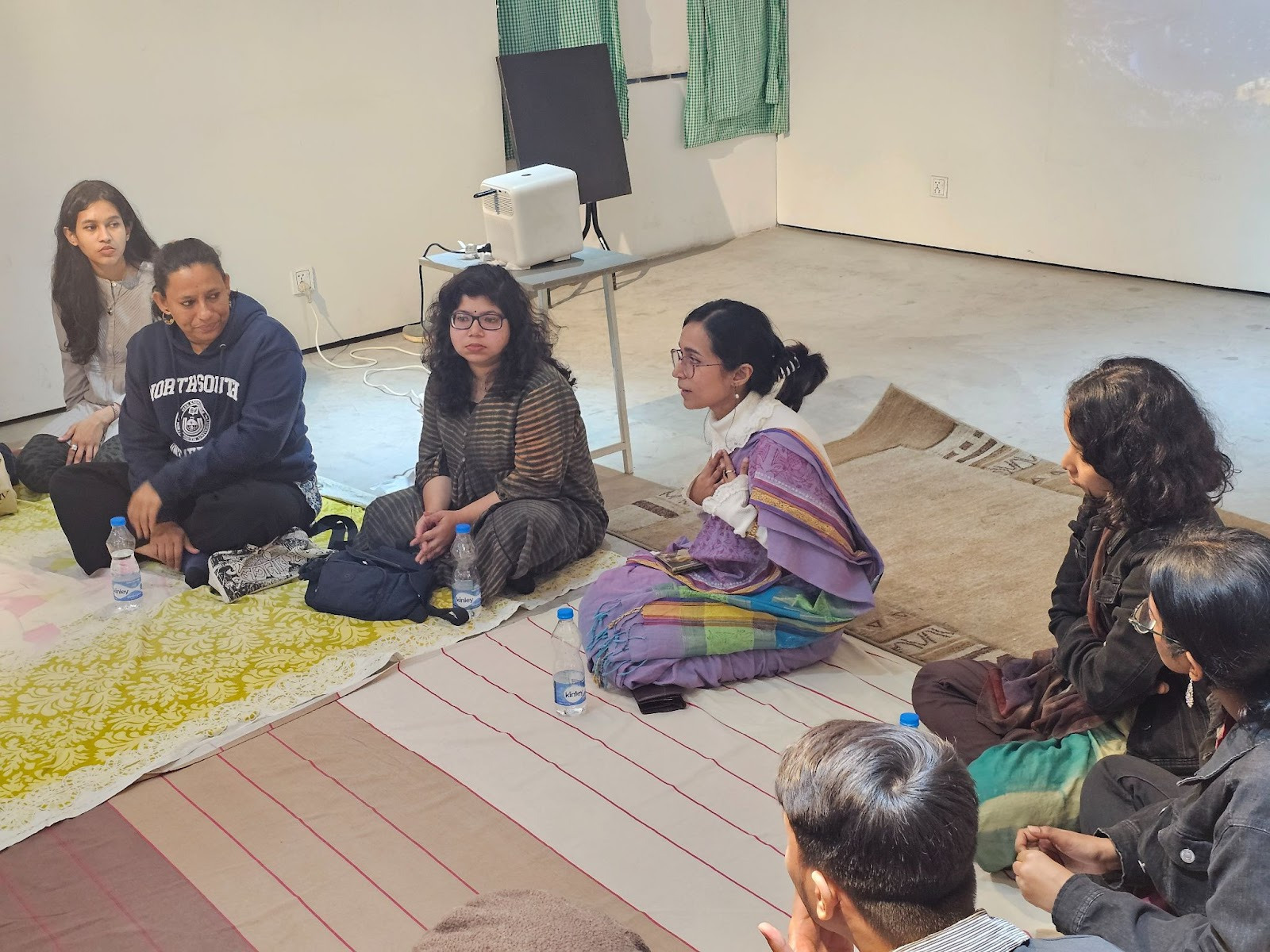
CHITRA Collective: Storytelling as Resistance
Through CHITRA Collective, Lamea addressed a critical gap in Bangladesh’s cultural landscape: the absence of sustained, safe, and politically conscious spaces for women, queer, trans, and underrepresented storytellers. According to Lamea, mainstream festivals often tokenise these voices or frame them as niche or “issue-based,” while intergenerational dialogue and critical engagement with digital rights, censorship, and structural marginalisation remain scarce. Thus, CHITRA emerged as a response to that silence: not just as a screening platform, but as a collective space rooted in care, critical conversation, and community accountability.
Rather than letting Echoes of Exile exist as a standalone film, Echoes of Exile has become a catalyst for forums, discussions, and collaborative programming, inviting audiences, especially young people, to move from passive viewing to active dialogue, co-creating narratives and strategies with filmmakers, activists, and community members.
Members joined CHITRA Collective because they were seeking a space that did not merely “include” them, but actively centred their voices, politics, and lived realities; a place where they are taken seriously rather than getting “tokenised”. As one member put it, “CHITRA feels less like a platform you submit to, and more like a space you build together.”
Screenings as Spaces to be Heard
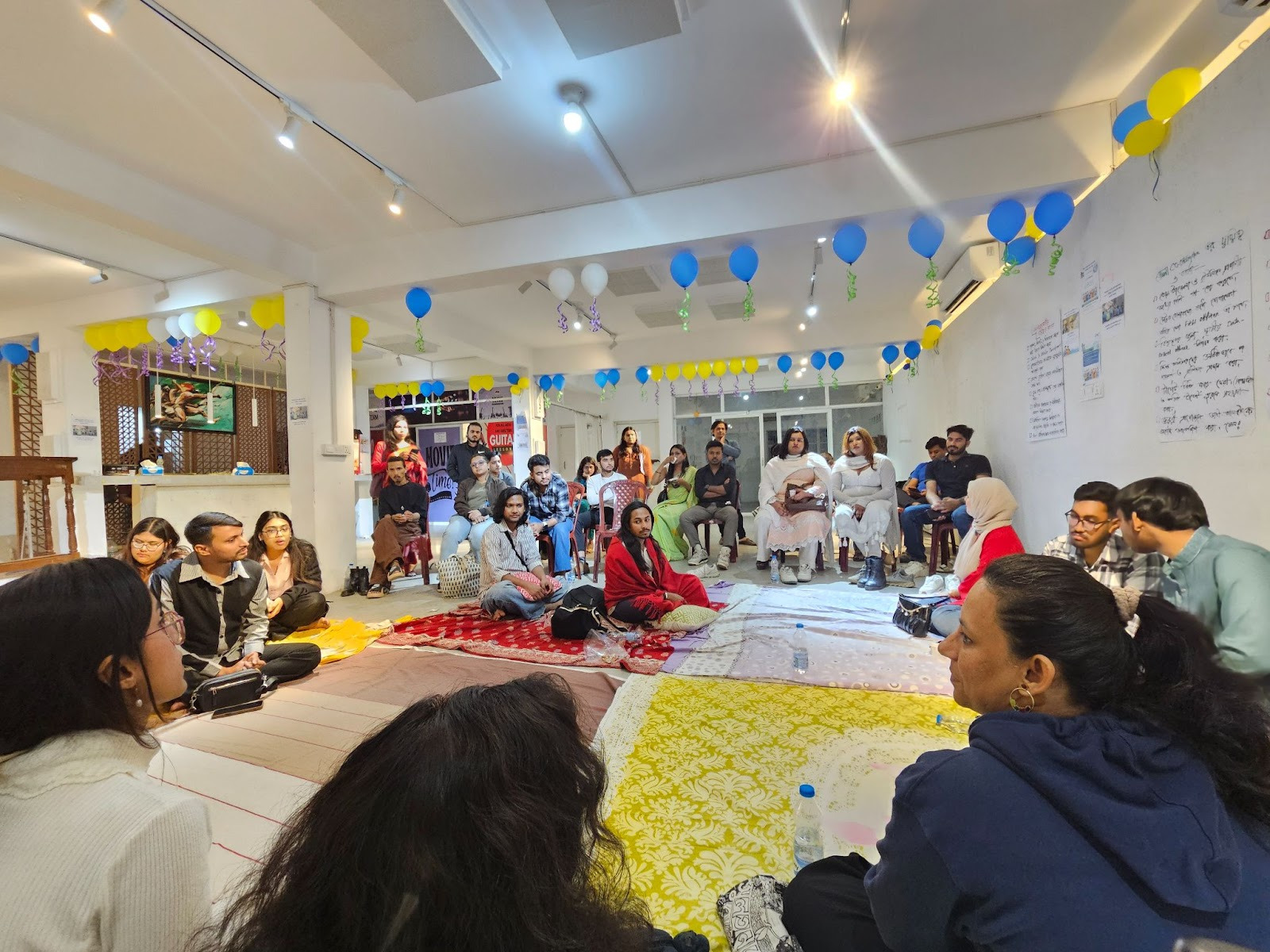
Echoes of Exile began as ethical witnessing, centring the lived realities of two hijra women across generations. The film foregrounded voice, agency, and emotional nuance, rejecting stereotypes and showing how digital and structural harms, online harassment, exposure, economic precarity, and social exclusion intersect in everyday life. The film was previously screened at the TFP Film Club Documentary Competition Workshop, a space committed to inclusion, courage, and empathy. Ahead of its launching ceremony, Chitra Film Collective also presented Fire (1996) by Deepa Mehta. The CHITRA Collective’s launch took place on 30 January this year.
Through CHITRA Collective, the film has expanded into ongoing spaces where audiences from diverse backgrounds can confront bias, understand structural inequities, and engage deeply with marginalised narratives. What began as storytelling for empathy is now a platform for dialogue, where young and older audiences alike learn to confront bias, understand structural inequities, and practice attentive listening across difference.
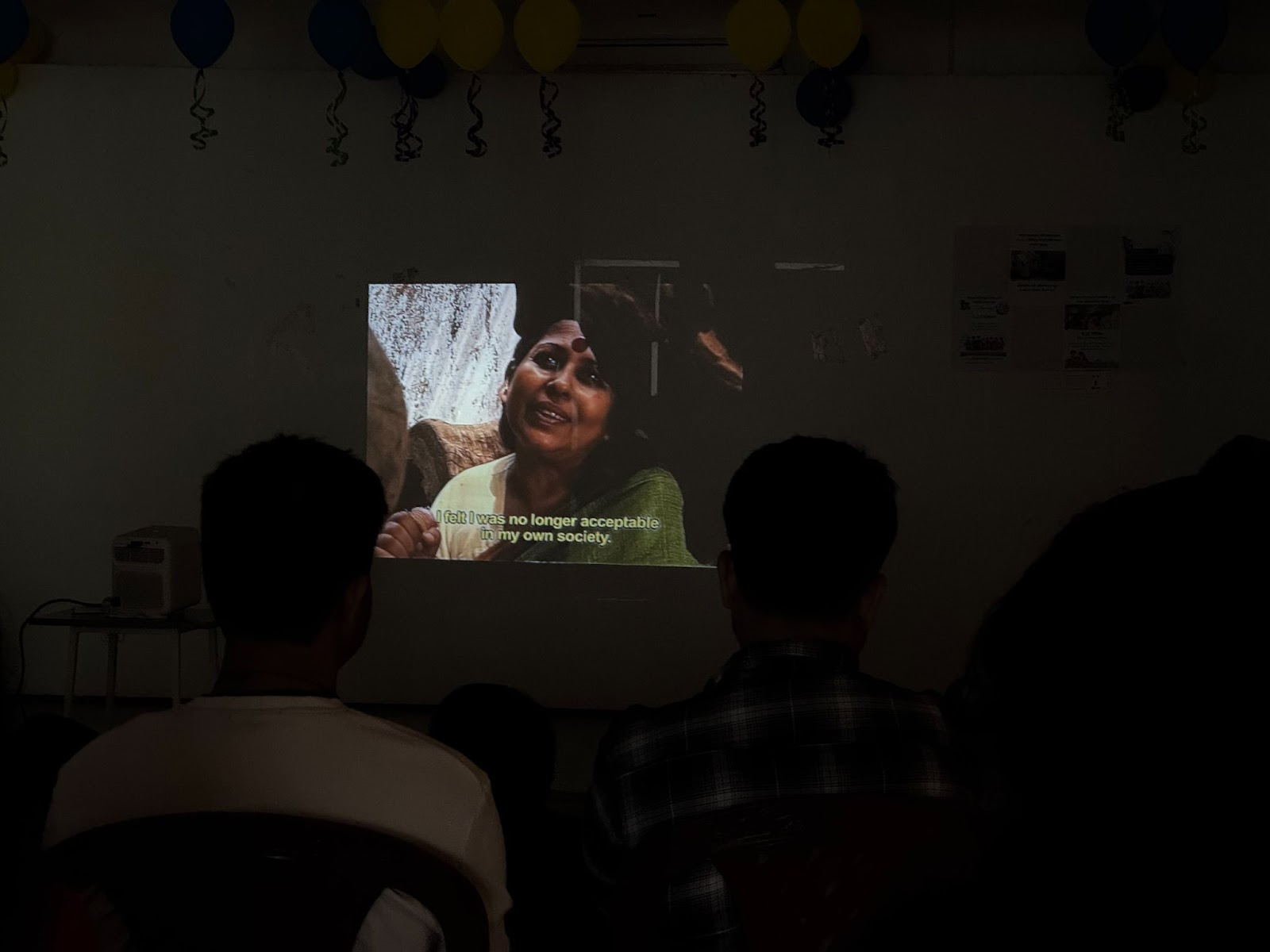
CHITRA doesn’t just amplify transgender and queer voices; it cultivates a culture of care and accountability, turning film into a tool for social awareness, civic engagement, and collective reflection. Here, stories are not only seen, but they are listened to, absorbed, and acted upon, building bridges between communities and reshaping the cultural space for underrepresented voices in Bangladesh.
Building Collective Futures
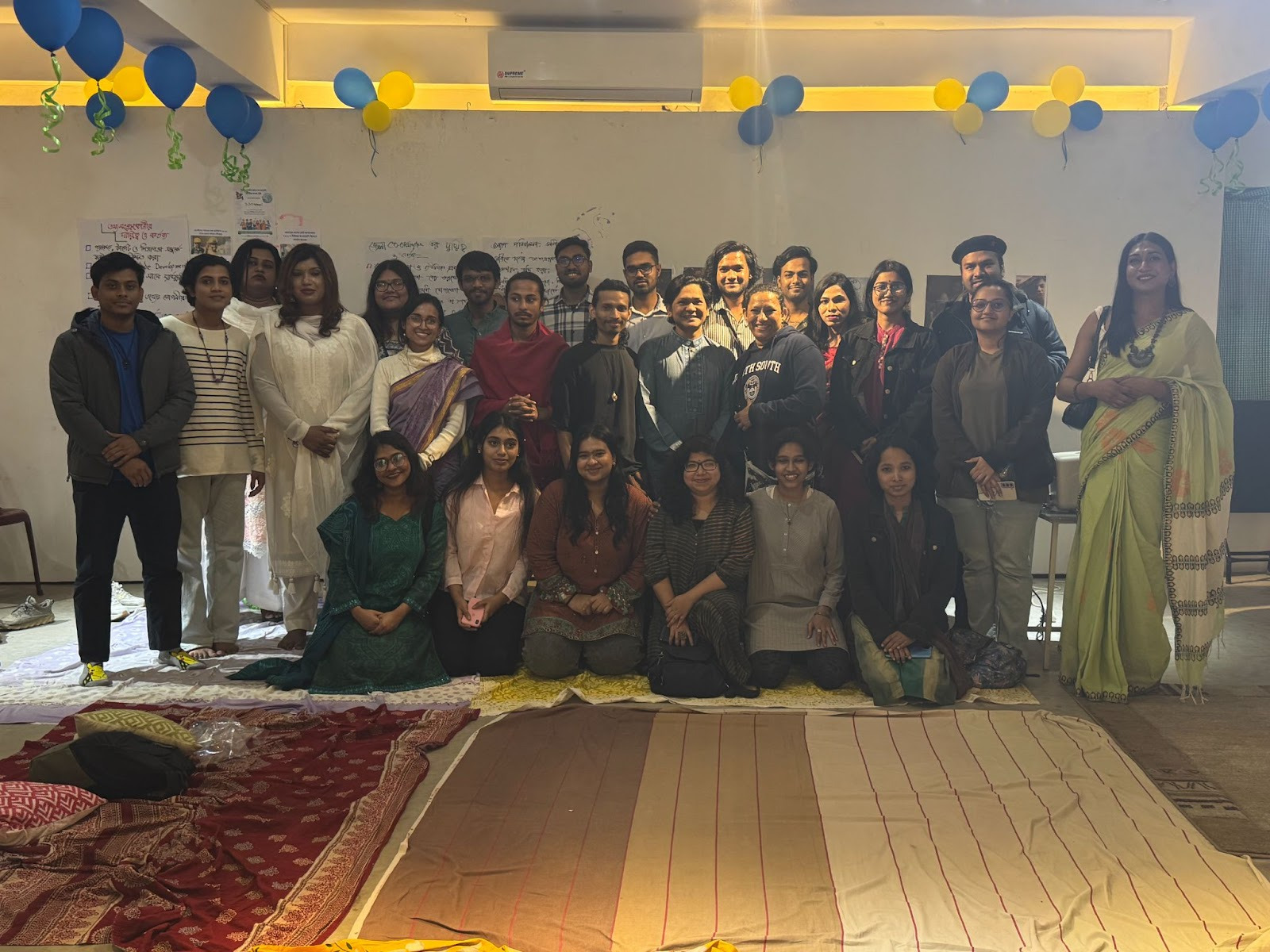
Looking ahead, Lamea envisions CHITRA Collective as more than a screening platform; it is a bridge connecting marginalised communities with broader society, positioning film as a civic tool for empathy, reflection, and action. In contexts where public discourse on gender, sexuality, and digital violence is limited, CHITRA offers mediated spaces where audiences can confront difficult truths through human stories.
CHITRA also seeks to normalise women, queer, trans, and underrepresented filmmakers as central to national culture, not exceptions, by fostering mentorship, collaborative production, and intergenerational exchange. Film-based spaces cultivate empathy without voyeurism, and when paired with structured dialogue, transform passive emotion into reflective, accountable engagement. These micro-publics of care allow audiences to listen across difference, confront bias, and imagine collective futures. For Lamea, sustained, community-led storytelling is essential: it transforms individual narratives into lasting cultural change, shaping an ecosystem where marginalised voices are not only heard and valued, but mobilised into action.
References:
https://globalpressjournal.com/asia/bangladesh/no-longer-safe-extremism-upends-trans-lives-bangladesh/index.html
https://www.hrw.org/news/2016/12/23/bangladesh-gender-recognition-process-spurs-abuse
https://www.scribd.com/document/862935280/JMBF-State-of-LGBTQI-Rights-in-Bangladesh-2024
https://engagemedia.org/2025/ttybdmy-analysis-echoes-of-exile/
https://engagemedia.org/2025/tech-tales-youth-extended-impact/
https://www.instagram.com/chitra.collective
IMPACT VISION